
Cash Stuffing: Why Gen Z Is Budgeting With Paper Envelopes Again
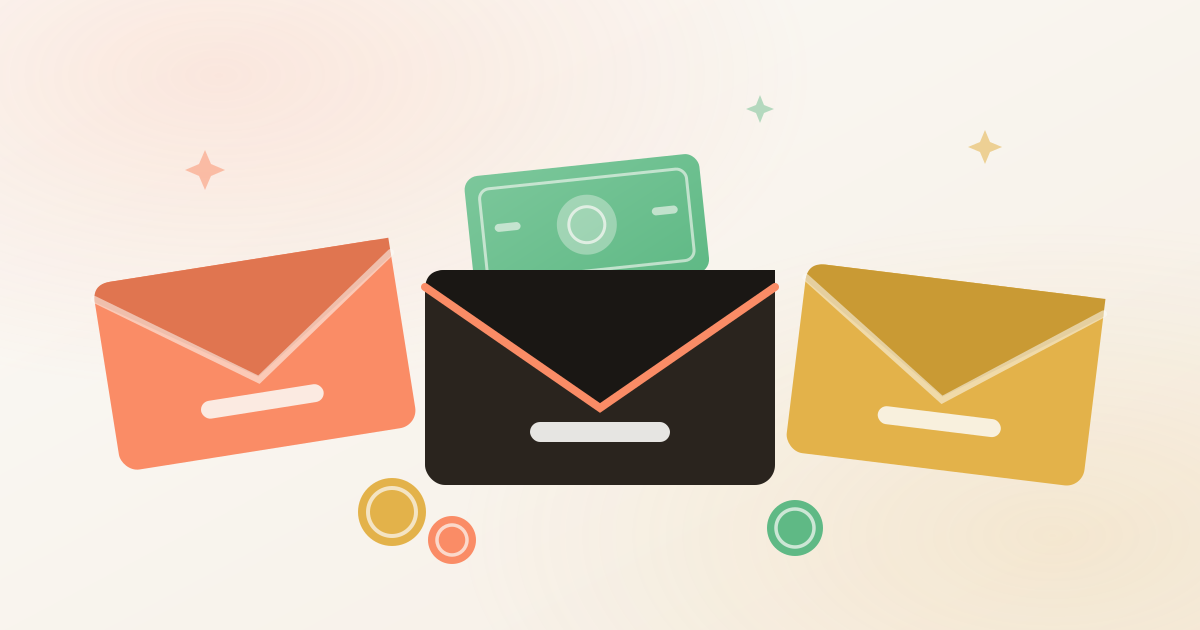
One of the loudest money trends of summer 2026 is also the oldest one in the book. Cash stuffing - drawing out banknotes and sorting them into labeled envelopes - is filling TikTok feeds again, and it is Gen Z, the most digital generation ever, doing the stuffing. PYMNTS called it grandma's budgeting making a comeback. The interesting question is why it works so well in an age of one-tap payments.
What cash stuffing is
The mechanics take one paragraph. On payday you withdraw cash and split it into envelopes labeled by category: groceries, transport, eating out, fun. When you buy something, the money comes out of the matching envelope. When an envelope is empty, spending in that category stops until next month. No apps, no spreadsheets, no willpower negotiations at the checkout.
Decades ago this was simply how households ran. The viral 2026 version adds pastel binders, laminated dividers and satisfying counting videos, but the rules have not changed since your grandmother enforced them.
Why it works - and why now
- Paying with cash hurts a little. Handing over banknotes registers as a loss in a way a contactless beep never does. That tiny friction is the feature: it makes each purchase a decision instead of a reflex.
- The limit enforces itself. An empty envelope is a budget that cannot be argued with. There is no "I'll fix it next week" - the answer is simply no.
- You see where money goes. The whole month's plan sits in your hands, physically. For anyone who has ever been surprised by a card statement, that visibility is the point.
The timing is not an accident either. According to PYMNTS Intelligence, Gen Z puts away 36.2% of take-home pay versus 26.5% for everyone else, and 85% of them grew up saving for bigger purchases. A Chime survey found 59% of people tried at least one viral saving trend in the past year, and aggressive "revenge saving" has been building since 2025. Envelopes are simply the most tactile expression of a mood that is everywhere: spend less, feel in control again.
Cash stuffing is not really about cash. It is about giving every unit of money one job and making the limit physical.
Three honest problems
- Cash earns nothing. Money sleeping in a binder is money skipping the interest a savings account would pay - while inflation quietly nibbles at it all year.
- Envelopes can be lost or stolen. A card gets frozen with one call; a purse full of the month's budget is just gone. There is no fraud protection on paper.
- Your life is online. Subscriptions, e-commerce, travel bookings - a growing share of spending physically cannot pass through an envelope. Most stuffers end up running a parallel digital budget anyway, which doubles the work.
Keeping the envelope logic, minus the envelopes
Here is the part we care about: none of those three benefits actually requires paper. What makes envelopes work is one limit per category, visible at all times, enforced without mercy. That logic ports straight onto your phone.
Cards on the table: we build an app like that. In SumiQ you give each category a monthly budget - your digital envelopes - and log spending by voice: say "groceries 32 euros" and the amount lands in the right envelope in seconds, with a live progress bar showing how much is left. The friction that cash provides through pain, voice logging provides through awareness: you say every expense out loud, literally.
And unlike a binder in your bag, the data sits on your device, works for online purchases, and never misses interest payments - your actual money can stay in an account that earns.
Bottom line: cash stuffing is the rare viral trend with sound fundamentals - hard limits per category beat vague intentions every time. If handling banknotes keeps you honest, stuff away. If you want the same discipline without carrying a month of cash around, the envelope method has learned to speak.
Sources: PYMNTS, Yahoo Finance / Chime, NerdWallet.
Track spending by voice
Say "coffee 4 euros" - SumiQ logs, converts and categorizes it. Free for 7 days.
Download on the App Store